There was a time in my practice when data lived in spreadsheets. It sat neatly organised, colour-coded, and analysed. I could tell you who was above, below, or within expectations. I could group, compare, and track. The privacy surrounding the sharing of student learning data at times can feel uncomfortably close to speaking about the learner rather than with them; a quiet conversation happening in rooms they are not part of.
The turning point came when I started asking a different question: What happens when the data leaves the spreadsheet/ “backroom data dialogue meetings” and enters the hands of the learner?
Reframing Data: From Numbers to Narratives
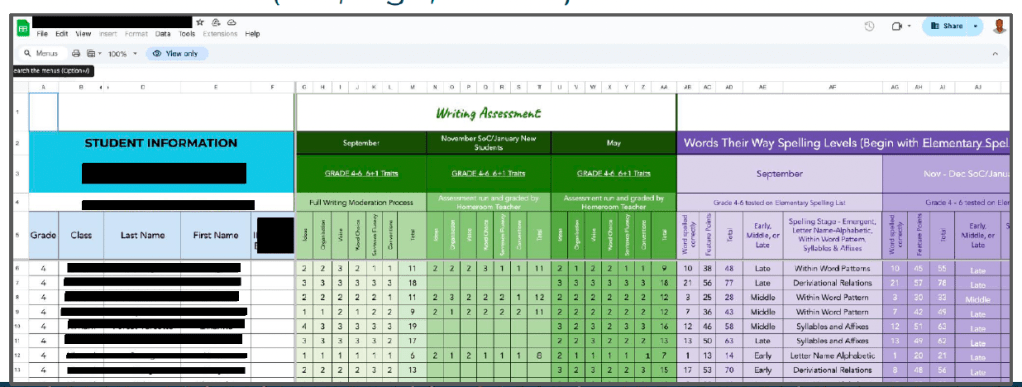
The baseline spreadsheet is our one-stop shop for a
snapshot (numerical ) of our assessment data points.
From this spreadsheet, we can easily form visible
conclusions, comparing student numerical data against
one another (low, high, middle)
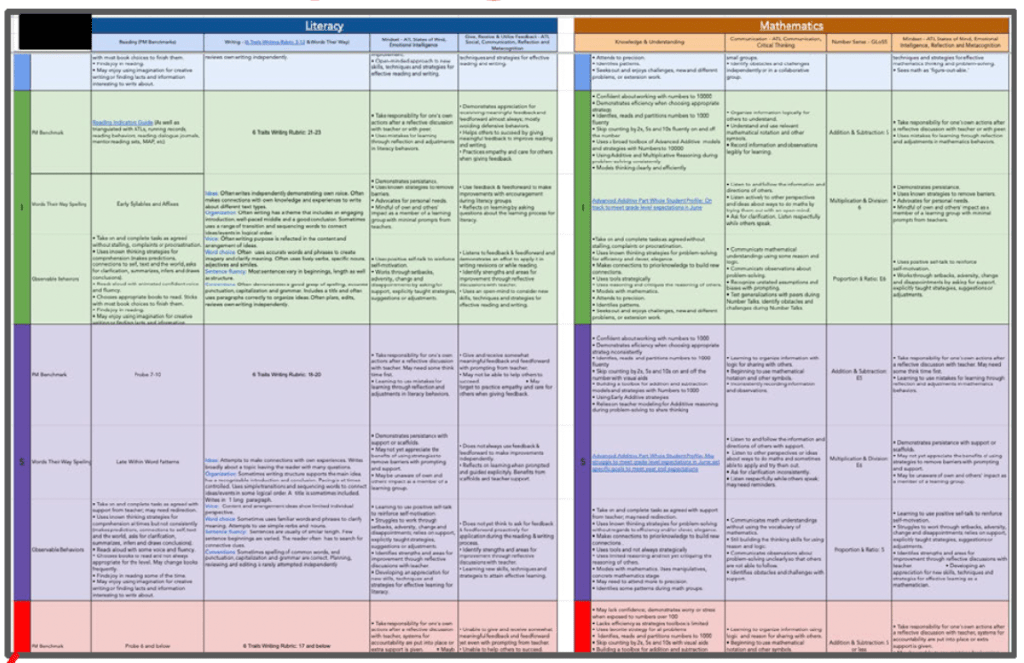
The indicators doc could
be used alongside
the baseline data to
form learning
statements (profiles)
about students
beyond just a
number.
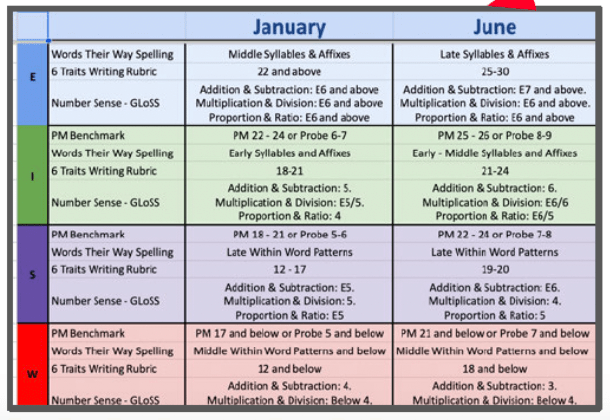
I use the I-Independent indicators
for January as a yardstick for whether
students are meeting expectations. Goals are
set to aim at this level.
At IICS, we are fortunate to have a rich range of data points available to us screening assessments, reading records, writing samples, and reporting indicators. These give us a numerical snapshot of where students are in their learning journey.
To move beyond this, I began to intentionally work with student-friendly learning profiles, translating data into language that students and families could understand. These profiles did not position students as fixed within a level, but rather within a range of possibility, allowing space for both confidence and challenge.
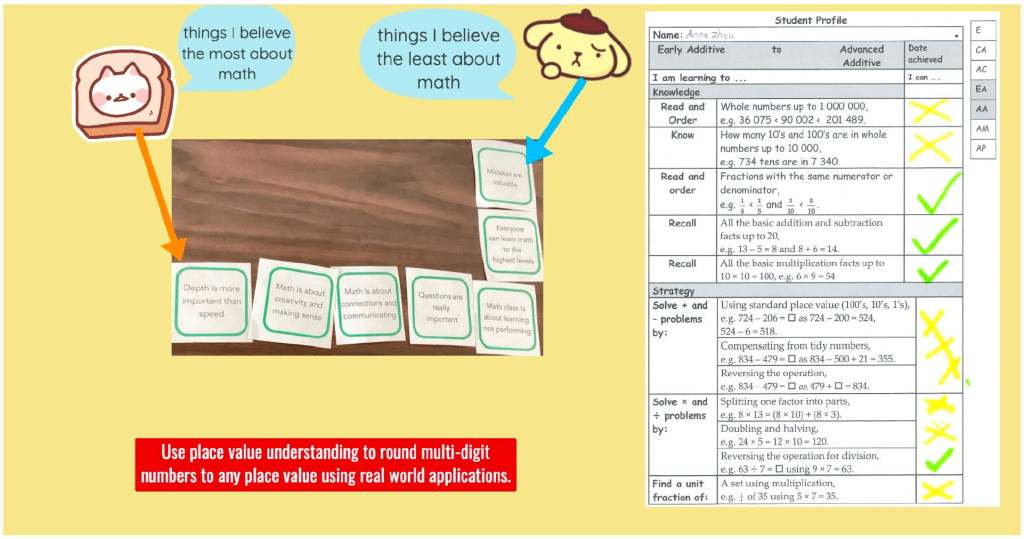
Students were no longer being told where they were. They were beginning to see it for themselves.
If students are to understand their learning, they must be involved in the process.
The Data-Driven Action Cycle frames this simply:
- Involve them
- Capture their thinking
- Prioritise reflection
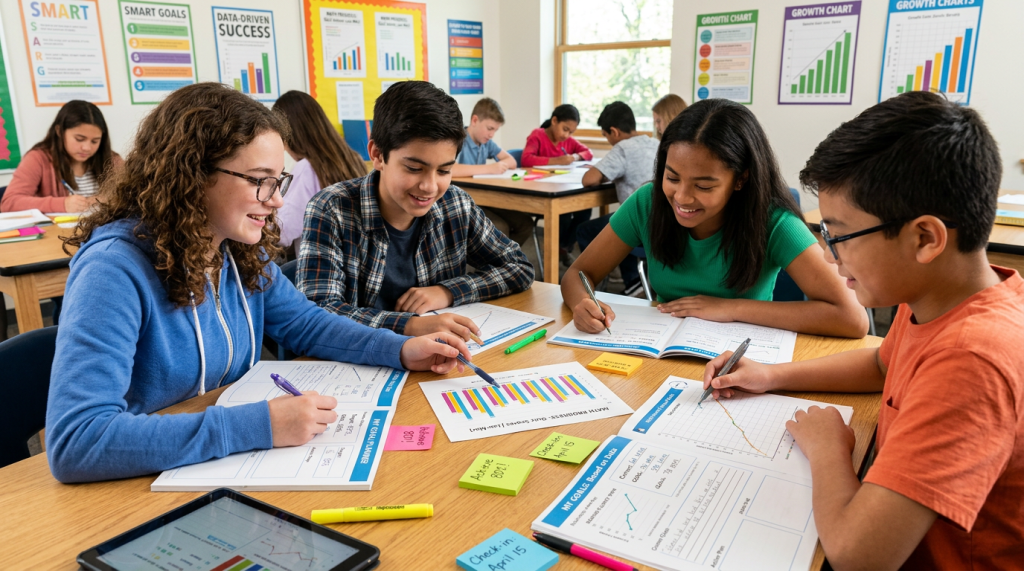
Like most IB PYP schools, at IICS, the goal-setting period, a few months into the school year, creates space for students to pause and take stock of their learning. Through guided conferences, they engage with their data, reflect on their strengths and challenges, and set goals across Approaches to Learning, Literacy, and Mathematics. The goal-setting period at IICS is powerful in intention. Yet, I found myself unsettled by the idea of waiting for a specific window to engage students in something so central to their learning. Over time, I began to rethink both the timing and the approach, from the onset, weaving goal setting into regular practice, where it could live and breathe alongside learning itself.
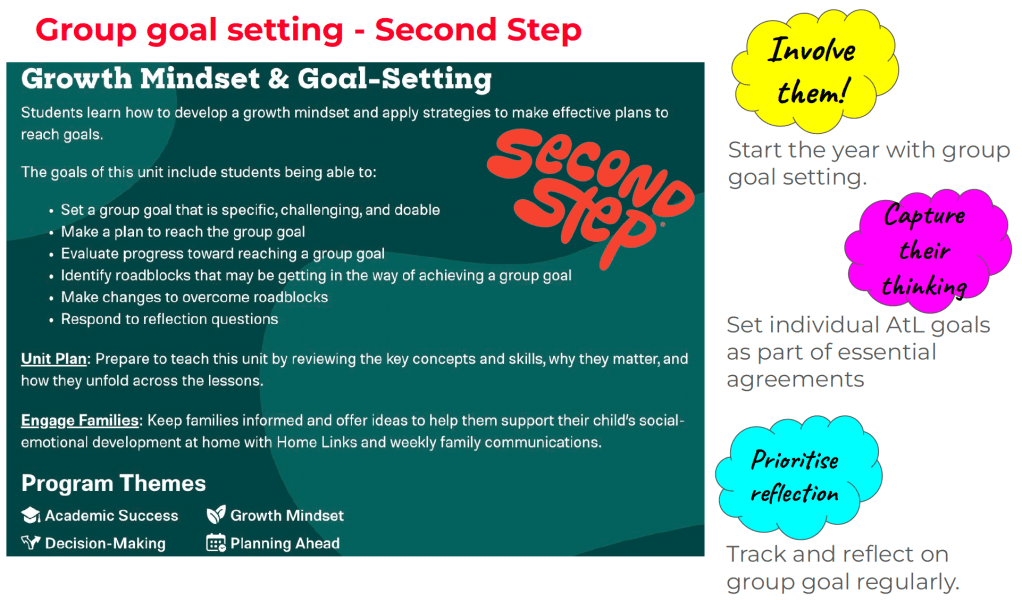
This became the foundation of how I approached goal setting in my classroom. We began the year with group goal-setting conversations. The Second Step unit on goal setting and growth mindset is a powerful anchor at the start of the year. Grounding our classroom in this early, it creates a consistent reference point that students return to when setting, revisiting, and refining their goals. As a class, we set a shared goal (naturally around classroom essential agreements to start the year), track our progress, and pause regularly to reflect. In doing so, students begin to experience what it means to work towards a goal over time.
Starting with Identity: “My Kind of Smart” , Jo Boaler’s “Mathematical Mindset”
Before engaging with data, we start somewhere more human. Students are invited to think about themselves as learners first, not through numbers, but through identity.
This past year, I tried out the language of multiple intelligences (often associated with Howard Gardner), but adapted into a student-friendly classroom reflection tool, “My Kind of Smart” task created by Jillian Starr (Teaching With Jillian Starr). In doing so, they begin to build the vocabulary they will later rely on when setting and reflecting on their goals, language around effort, “yet”, strategy, and growth.
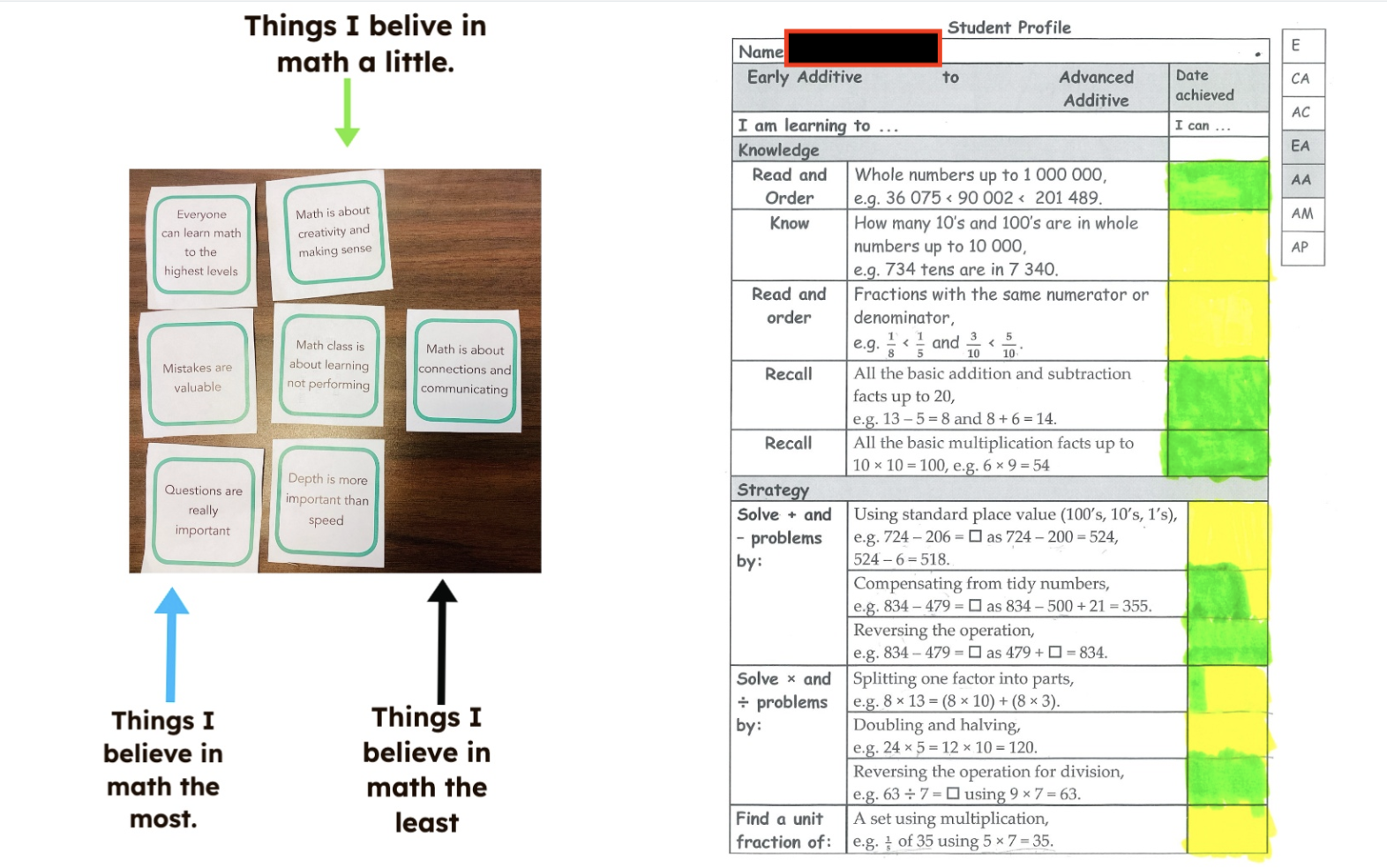
sorting common beliefs about mathematics, an important first step in making thinking visible. 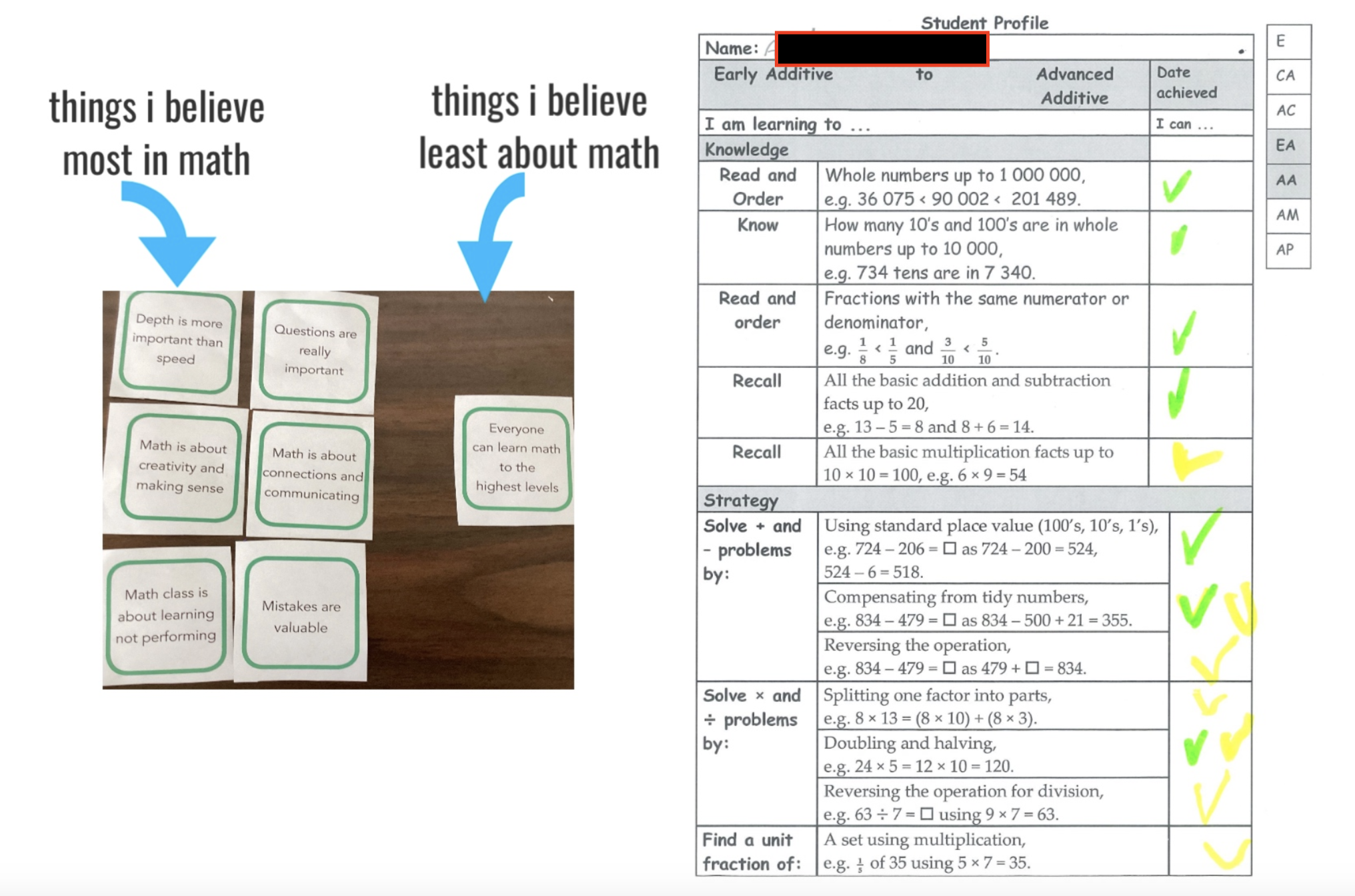
Over time, these beliefs shift. Students revisit and reorganise their thinking. 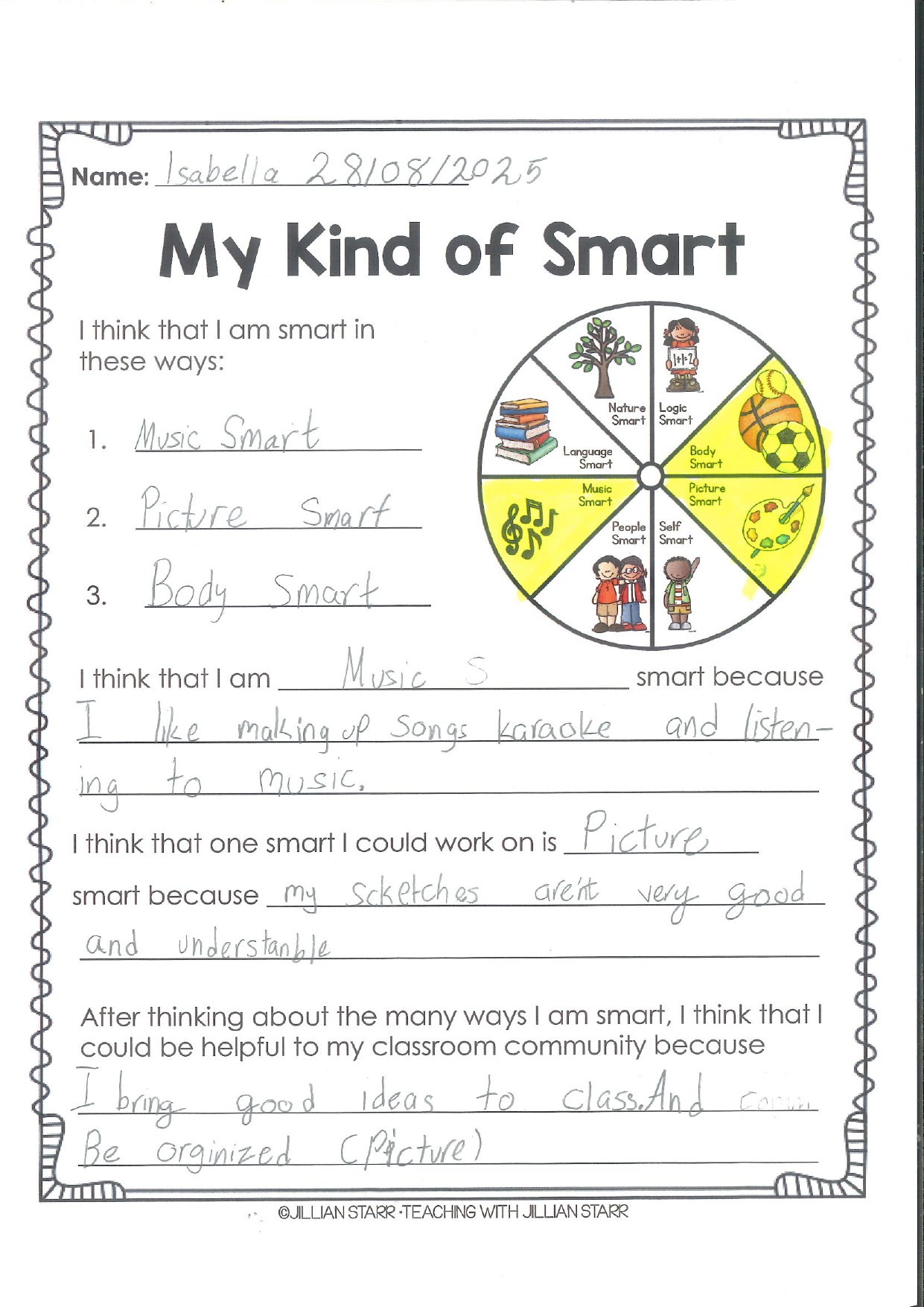
reflection using the “My Kind of Smart” task 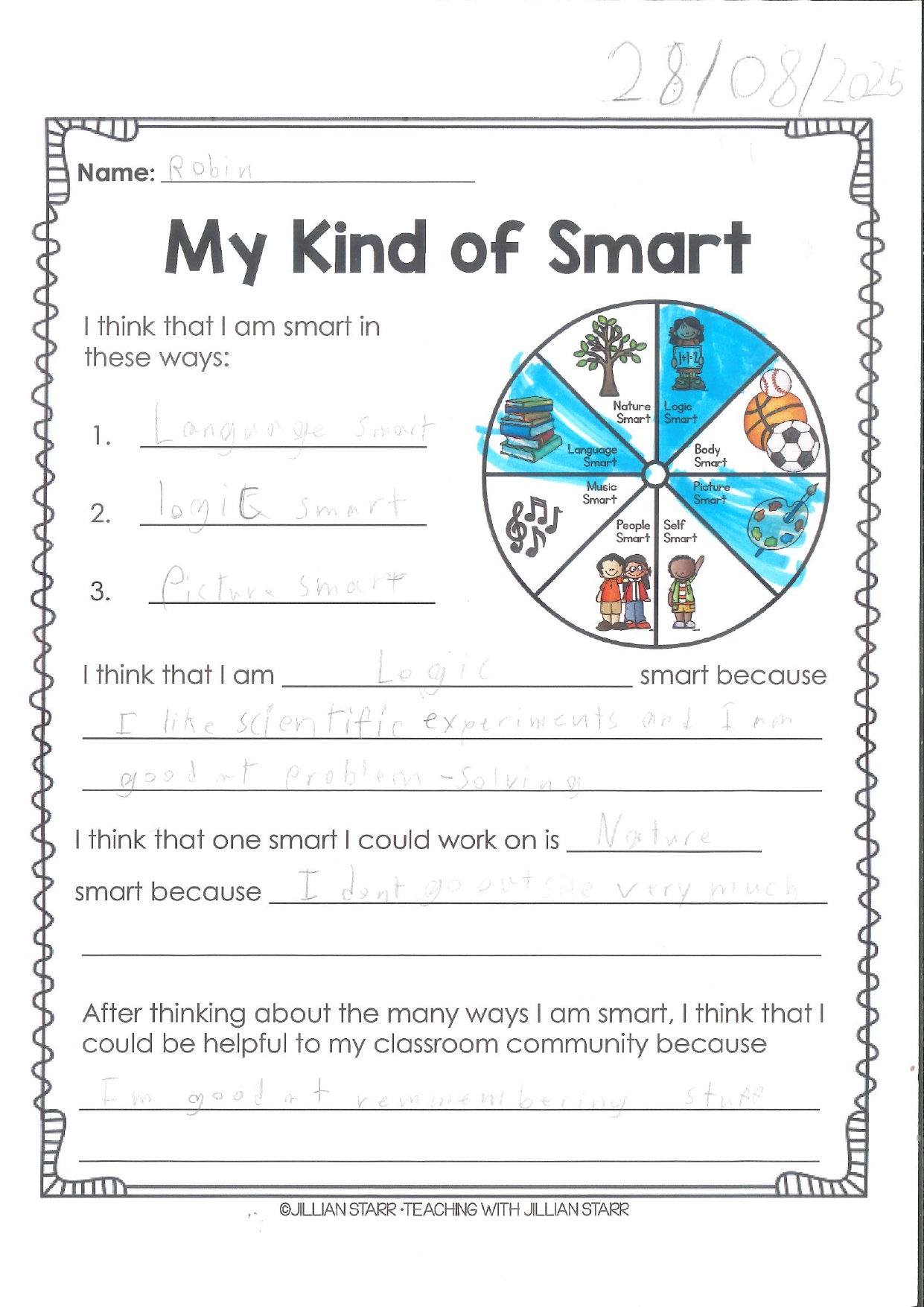
reflection using the “My Kind of Smart” task 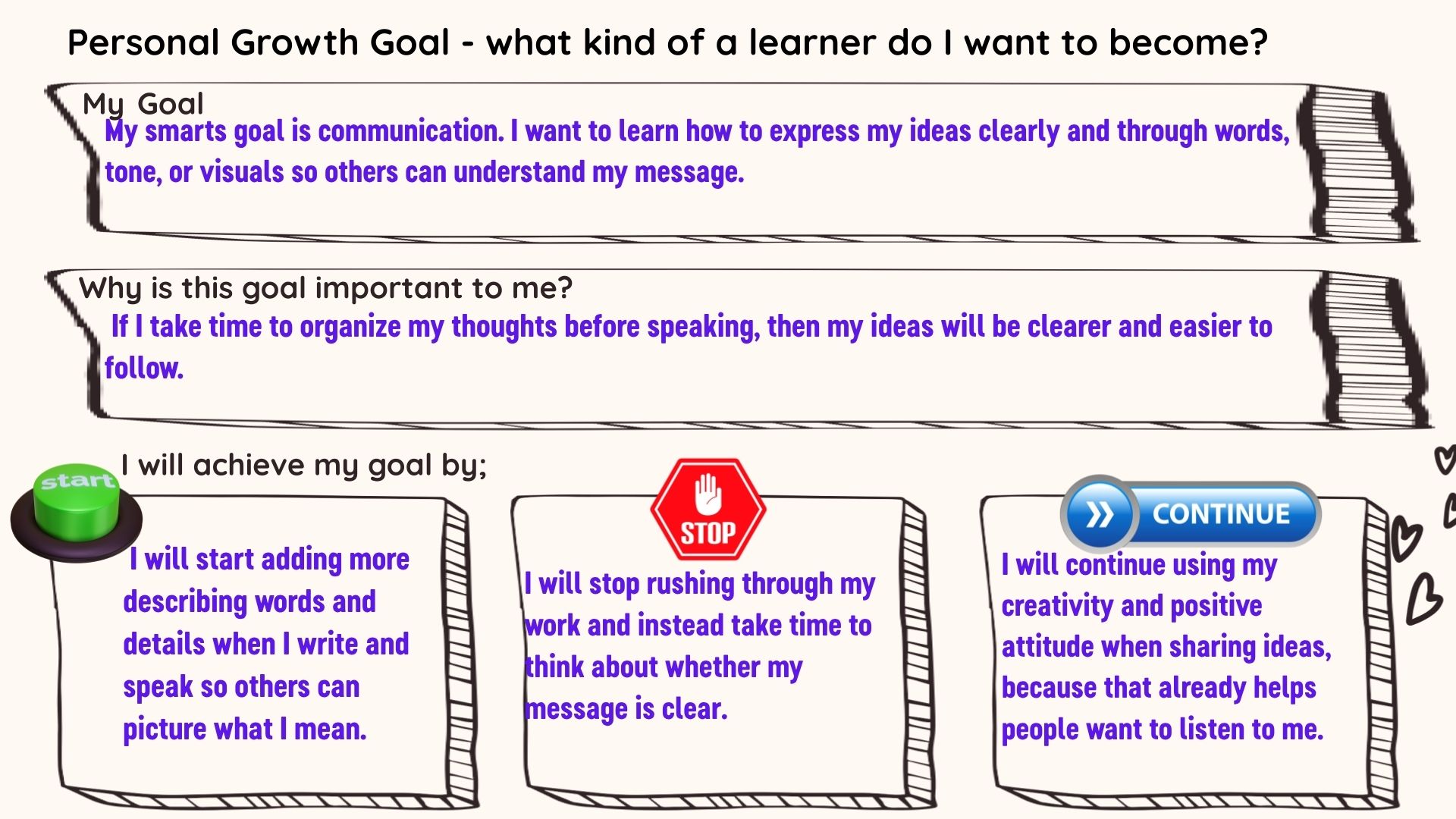
clear goals, justify their importance, and identify specific actions through “start, stop, continue” thinking.
Previously, I have used this ‘sorting beliefs about math’ task from Jo Boaler’s “Mathematical Mindset” / YouCubed resources. Students are not only reflecting on what they can do, but also on how they think about learning. By the time we move into more formal goal setting, students are not encountering these ideas for the first time.
They already have the words.
Guiding the Goal-Setting Journal
A critical part of this process has been teaching students how to read their own data. These questions, drawn from how we unpack reading, spelling, and numeracy inventories, help students move beyond seeing data as a result and towards understanding it as information they can act on. Students are guided to notice patterns, identify strengths, and recognise next steps. The data begins to shift in purpose.
So by the time the individual conferencing rolls in (goal-setting season), students meet with me to look closely at their reading, spelling, and mathematics data. We talk through what the data shows, what it might mean, and where it could lead next. I have trialed different models where I frontload students engaging with data before mini-conferencing to refine their process and products.


By the time students sit down to complete their goal-setting journals, very little of it feels new. Through mindset conversations, they have developed a shared language around effort, challenge, and growth. Through class goals and regular reflection, they have experienced what it means to work towards something over time.
Extending the Conversation: Using AI to Support Student Independence
As a trial, I began incorporating custom AI chatbots (using Magic School), designed as walled gardens and pre-loaded with individual student data. These spaces are intentionally structured, not open-ended, allowing students to interact safely with their own learning information through guided dialogue.
The intention is not to replace the teacher conference. Rather, it is to extend it.
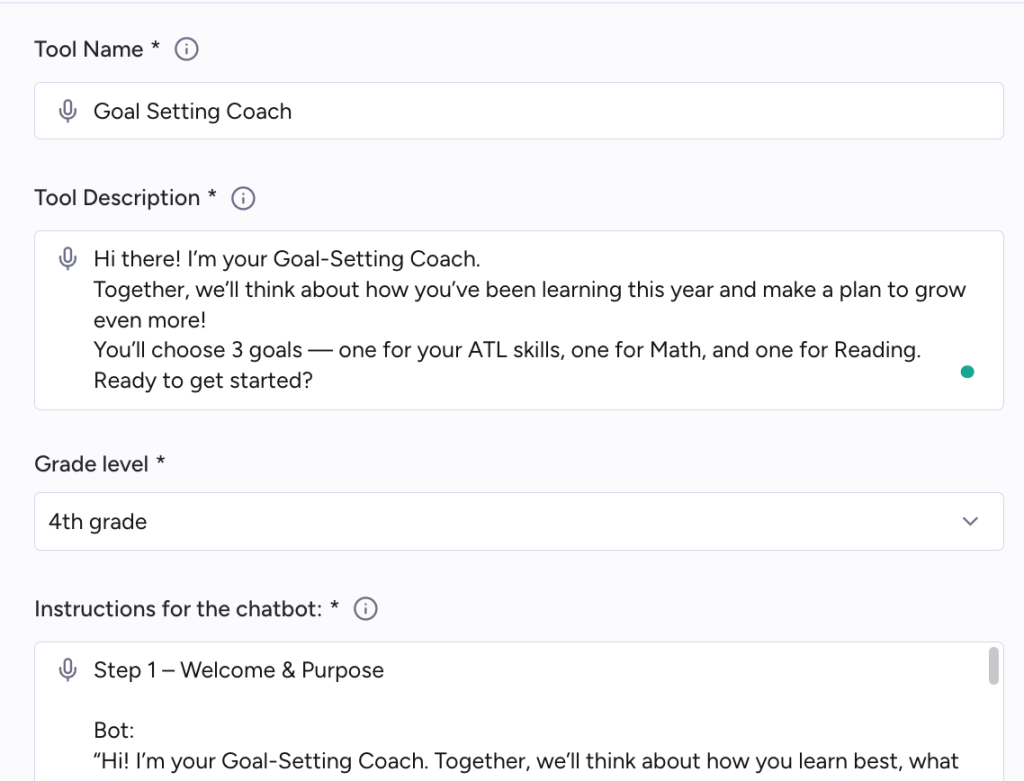
A custom-built AI chatbot designed to guide Grade 4 students through structured goal-setting conversations, grounded in familiar language and routines from the classroom. 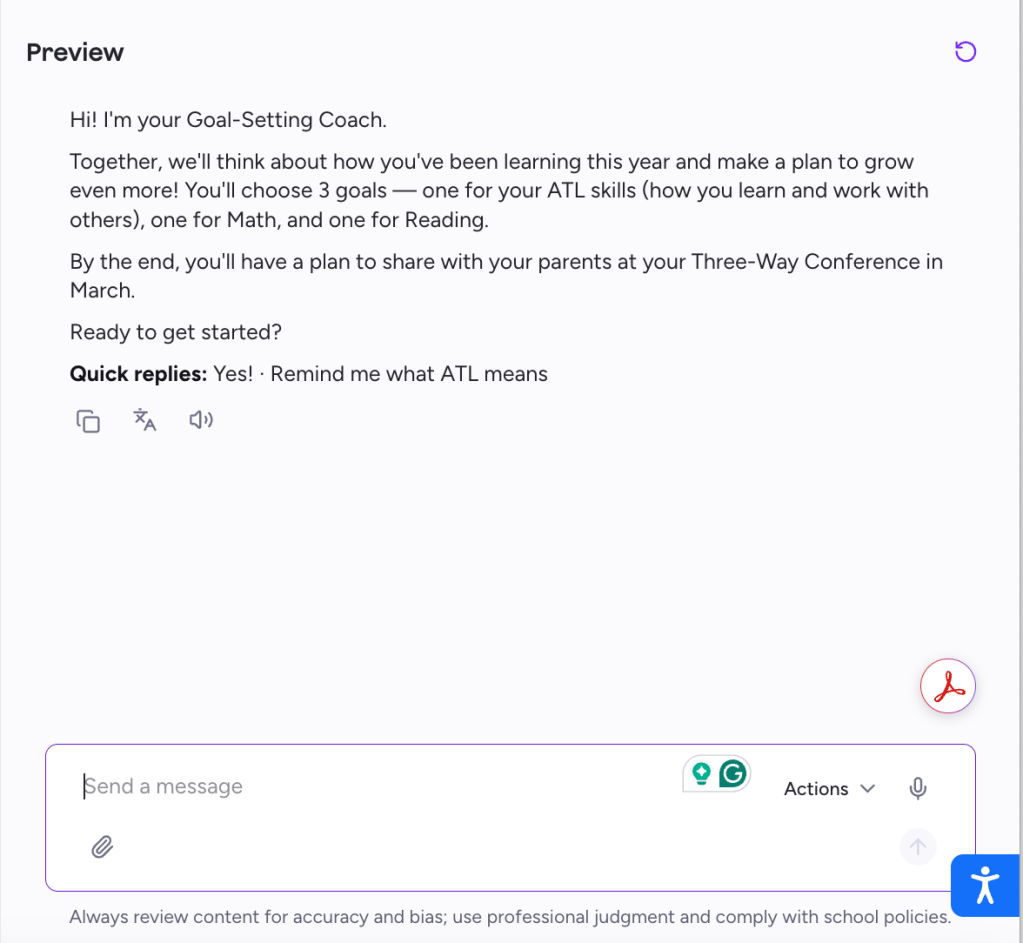
The student-facing interface invites learners into a guided reflection 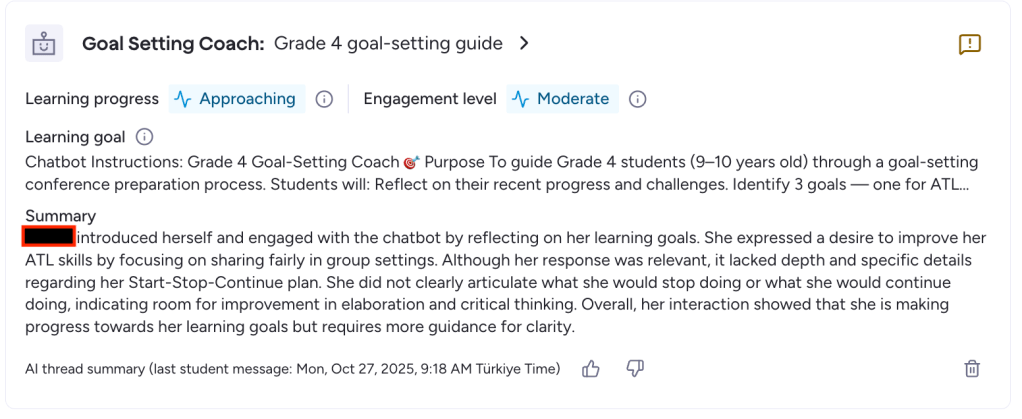
An example of a student’s initial interaction with the chatbot, showing emerging thinking. 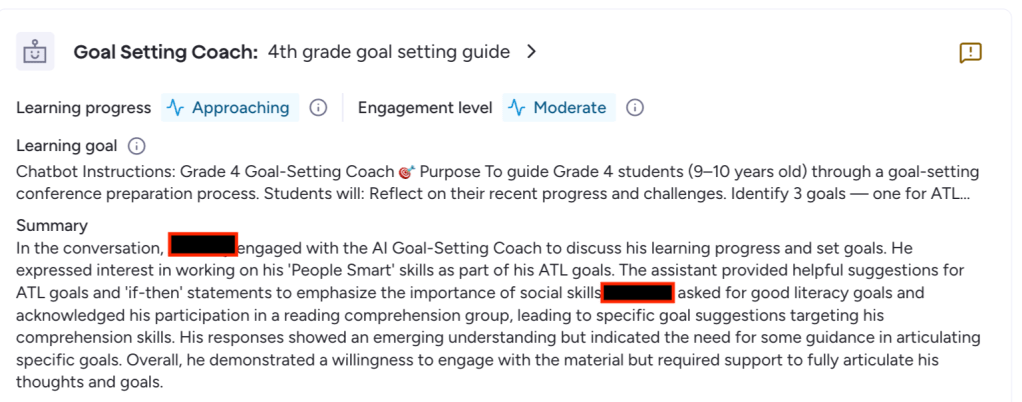
The AI supports students by offering suggestions, asking follow-up questions. 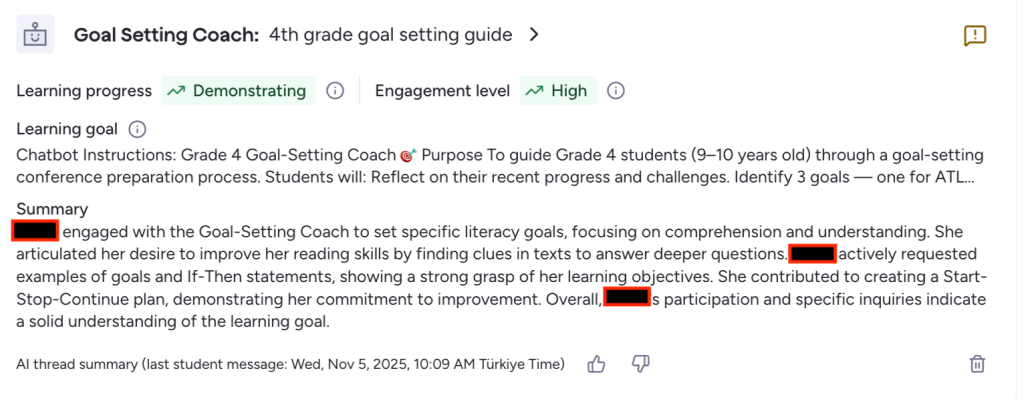
A later interaction showing increased clarity and independence, where the student is able to articulate more specific goals and engage more confidently with the process.
This layer gives students time and space to process their thinking before bringing it into a shared conversation, where we can refine, challenge, and deepen their understanding together.
This is still very much a work in progress.
But it points towards a possibility where students are not only capable of reading their data, but are also supported in interacting with it in ways that are immediate and personalised, a crucial step towards building self-assessment AI-capable students!